Why Irregular Income Breaks Calendar-Month Budgeting
Freelancers, small business owners, and commission salespeople run into a problem W-2 employees rarely face: money that shows up in unpredictable amounts at unpredictable times. The underlying squeeze is the same one everyone knows. They live paycheck to paycheck too, except nobody tells them when the next paycheck lands.
Calendar-month budgeting assumes a baseline arrives every 30 days like clockwork. It has no answer for the salesperson who books $15,000 in March and $2,000 in April, or the contractor who invoices in January and gets paid in April. The budget anchors spending to a rhythm the income never had, so it snaps the first time reality disagrees.
The COVID shutdown made this concrete. Restaurants closed by the thousand, and plenty of them were not doomed by long-term demand: they had built their monthly spending around revenue that stopped arriving, with no buffer to carry them through the gap. Sudden unpredictable income exposed exactly how thin the planning was underneath.
Timing is only half of it. About 84% of people who set a budget fail to stick to it, and when income is unpredictable, a failed budget costs more. Someone on a steady $5,000 salary who blows the plan has a rough month. Someone drawing $30,000 commissions quarterly who blows the plan may have nothing until the next check clears.
Plan Against a Full Year, Not a Single Month
The fix starts by changing the unit of measurement from months to years. Map expenses across every spending category for twelve months instead of asking whether this particular month balances.
Watch what that does to a lumpy year. A contractor invoices $50,000 in Q1, $8,000 in Q2, and $35,000 in Q3, which averages to roughly $31,000 a quarter or $10,333 a month. The monthly budget declares September a disaster because it wanted $10,000 and got $8,000. The annual budget shrugs, because the year as a whole covers the year as a whole.
Build it by listing every category you actually spend in: rent, utilities, groceries, insurance, subscriptions, transportation, medical, childcare, whatever your life includes. Pull twelve months of history for each one. Rent barely moves, but groceries drift, entertainment swings, and medical bills tend to arrive as emergencies rather than line items. Total the year, divide by twelve, and you have your true monthly need: the number you will pay yourself every month no matter what lands in the account.
The Income-Smoothing Method
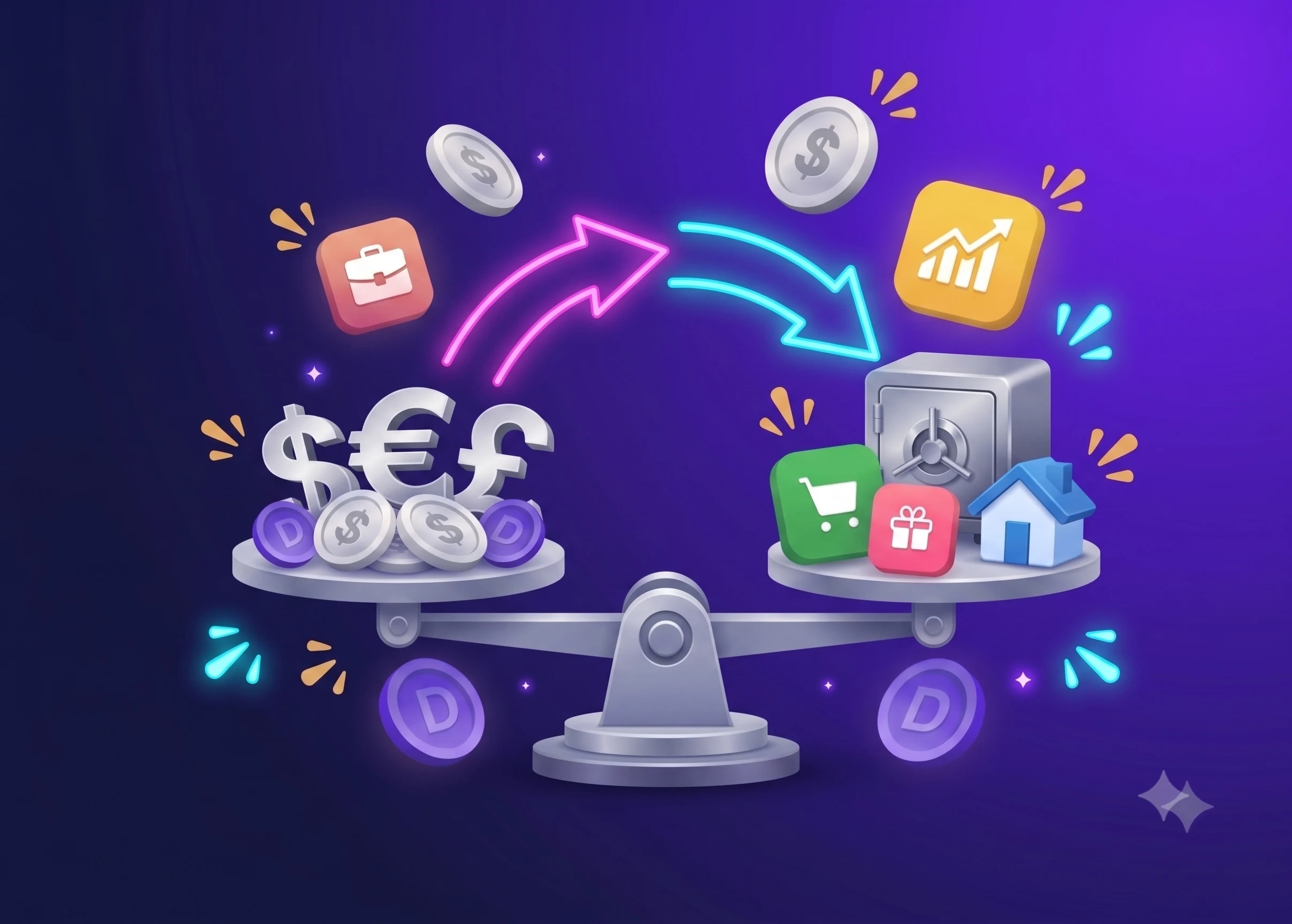
With an annual baseline in hand, the method has three moving parts: pay yourself a fixed amount monthly, bank everything above it, and pull from that bank when income falls short.
Set a Fixed Monthly Draw
Transfer the baseline from your business account into checking on the same schedule every month. Annual expenses of $120,000 make your draw $10,000. Take that $10,000 in the month that brought in $3,000, and take the same $10,000 in the month that brought in $45,000. The consistency is the whole point.
Move Surplus to a High-Interest Savings Account
Everything above the baseline goes straight into a dedicated high-interest savings account. A $35,000 month against a $10,000 baseline means $25,000 gets deposited, not spent. That money has a job already: it covers the months that come up short.
Do this for a while and the account grows into several months of expenses. On a $10,000 baseline, a buffer of $30,000 to $50,000 carries you through three to five thin months without reaching for debt.
Withdraw During Shortfall Months
When income lands under the baseline, pull the difference out of savings. Income of $6,000 against a $10,000 baseline means a $4,000 withdrawal, and checking ends up exactly where it always does. Your spending never has to react, which means the irregularity stops touching your actual life.
Spending an entire large commission or business check as soon as it arrives resets finances to zero and restores income anxiety.
Avoid Spending Every Big Check at Once
The method has one real failure mode, and it is discipline. Spend the whole commission the week it arrives and nothing gets banked, so the buffer never forms. The next lean month then feels identical to the paycheck-to-paycheck trap you were trying to leave.
Lifestyle inflation does the same damage more slowly. Income rises, so the car gets bigger and the house gets nicer, and the surplus disappears into monthly obligations before it can reach savings. People end up earning substantially more while staying just as stuck. What you keep decides your stability, not what you bill.
Start With Clarity on Your Actual Income Pattern
Setting a baseline requires knowing what your income actually does, not what it feels like it does. Collect twelve months of records: invoices paid, deposits, contract work, passive income, all of it. Chart the month-to-month variation, work out the average, then find your worst month and your best month, because those matter more than the middle.
Say your income swings between $3,000 and $45,000. The $24,000 average makes a terrible baseline, since you would overdraw every time a $3,000 month came around. Set it low on purpose: the average of your three worst months, or lower if you want more room. Underspending a good month just fattens the buffer, while overspending a bad one starts the debt cycle.
Clarity also means dragging the hidden items into view. An annual review usually turns up more subscription spending than expected (streaming, software, cloud storage), plus annual charges like car insurance, professional licenses, and memberships, plus seasonal costs like holiday gifts, summer camps, and property taxes. These hide in the spacing between bills, which is precisely why month-to-month thinking never catches them. Getting full clarity on those patterns is the first step out of income anxiety.
After Stabilizing Income: Building Passive Income
A stable draw and a funded buffer change what you can think about. The immediate pressure lifts, and the next move becomes learning to invest and build passive income.
Interest, dividends, rental income: each one cuts your dependence on constant active work. A freelancer earning $100,000 with $10,000 of it coming from investments sleeps better than one who has to win every dollar from new clients. Same total, but a piece of it showed up without being chased.
That shift only works after income is smoothed. Invest while still living check to check and the first emergency forces you to sell, usually at the worst moment. Passive income needs capital you can leave alone for years, which is a different thing from cash idling in checking.
Knowing What Is Safe to Spend in a $2,000 Month
The annual plan lives in a spreadsheet, and that is where it gets painful. You have a $10,000 baseline and a buffer, but the question that hits you in a store is narrower: given the invoice that has not cleared, the insurance charge coming in eleven days, and the goal you are still funding, what can I spend right now? Recalculating that by hand every time something changes is how the plan quietly dies.
Picture the same question answered by one number that updates the moment you record a bill or adjust a goal, with the full breakdown visible when you want to check the math.
Dzing computes that safe-to-spend number from a transparent formula built on your planned operations: recurring salary, subscriptions, bills, and one-off expenses. Budgets and savings goals feed the same calculation, multiple accounts and currencies are supported, and spending history and analytics show whether your real spending matched the baseline you set. Entry is manual by design, which means you decide when your fixed monthly draw is recorded rather than letting deposit timing dictate the picture.