Emergency Fund vs Sinking Fund: What’s the Difference
Two piles of savings, two opposite jobs, and most people run them as one. An emergency fund holds money for shocks you cannot predict: job loss, a medical bill, a transmission that quits in traffic. A sinking fund holds money for costs you already know are coming, like the annual insurance premium, holiday gifts, home maintenance, or travel you have put on the calendar. Blur them together and you get one of two bad outcomes: an emergency reserve too thin to matter, or cash sitting idle that should have a date and a purpose attached.
What Each Fund Is For
An emergency fund absorbs a shock after it lands. You lose the job, the transmission goes, the bill arrives, and the money covers it. There is no calendar behind that money and no plan for it, which is exactly the point.
A sinking fund keeps the shock from happening. A $1,200 car insurance bill due in month seven stops being a surprise once you set aside $200 a month starting in month one. The same logic covers anything foreseeable that does not arrive monthly: property taxes, vehicle registration, holiday shopping, home repairs, a conference you attend every spring.
The line gets clearer with an appliance. If your refrigerator dies without warning, that is the emergency fund’s job. If the refrigerator is aging and you expect to replace it within two years, you start setting money aside now, and the replacement never touches your emergency reserve.
Timing and Frequency of Use
An emergency fund has to be available at all times, because nothing tells you when the triggering event arrives. A job loss, a medical emergency, or a car failure could hit next week, next month, or not for years. That unpredictability is why the money stays liquid instead of earning a little more somewhere less reachable.
A sinking fund runs on a known timeline. You need $1,200 for car insurance in six months, so you put in $200 a month, the balance climbs on schedule, and you withdraw it when the bill lands. Then the cycle restarts for the next period.
That difference shows up in how often you touch each one. In a stable year you might not withdraw from your emergency fund at all. Sinking funds rotate like envelopes: money in every month, money out when the expense hits, refill, repeat. Over twelve months you could touch your sinking funds a dozen times and leave the emergency fund alone.
Funding Method and Budgeting Math
Building an emergency fund is a project with an end. Pick a target, usually three to six months of living expenses depending on how stable your income is, then fund it until you hit the number. After that it stops being a monthly line item and becomes a layer underneath your cash flow, topped up only when you withdraw from it.
Sinking funds get budgeted every month, and the math is division: total cost divided by months remaining. That $1,200 annual insurance premium due in six months becomes a $200 line in your budget, set aside each month until the bill arrives. Come month seven, with the policy renewing annually, you restart at $100 a month to rebuild $1,200 over the next twelve. Most people run several of these at once, each with its own contribution and its own due date.
Liquidity: Where to Keep the Money
Emergency money needs to move within hours, which makes a high-yield savings account the default choice: real bank, real interest, fast withdrawal. Some people hold part of it as cash on hand for the same reason, trading the interest away for immediate access.
Sinking funds tolerate a small delay. Money market accounts, a credit union savings account, or a labeled envelope system (paper or digital) all work fine, since you know the withdrawal date weeks in advance. Keeping each goal in its own account or bucket also makes it harder to spend the vacation money in March.
The Psychology Behind Each Fund
An emergency fund buys peace of mind. Three to six months of expenses sitting in an account changes how a layoff rumor or a sudden diagnosis feels, because the first question stops being how you pay for next month.
Sinking funds do something different: they build discipline. Every contribution is evidence that you saw the expense coming and handled it, so a large bill never turns into a scramble. The habit also blunts discretionary overspending, since the budget already has a claim on that money.
How Much to Save in Each Fund
Three to six months of living expenses is the standard recommendation for an emergency fund, and where you land inside that range depends on your risk. A salaried job you have held for years, few dependents, and a second income in the household argue for three months. Variable income, a single-income household, or people who depend on you argue for six months or more.
Sinking funds are smaller and tied to a specific number. Typical ones look like $500 for holiday shopping, $1,000 for home maintenance or car repairs, $200 for annual vehicle registration, or $300 for a planned vacation. The size is not a guess, it comes from the real cost of the goal divided across the months you have.
How Many Funds You Actually Need
One emergency fund is usually enough. A single pot covers any unexpected expense, and splitting it across accounts mostly adds confusion at the moment you least want it.
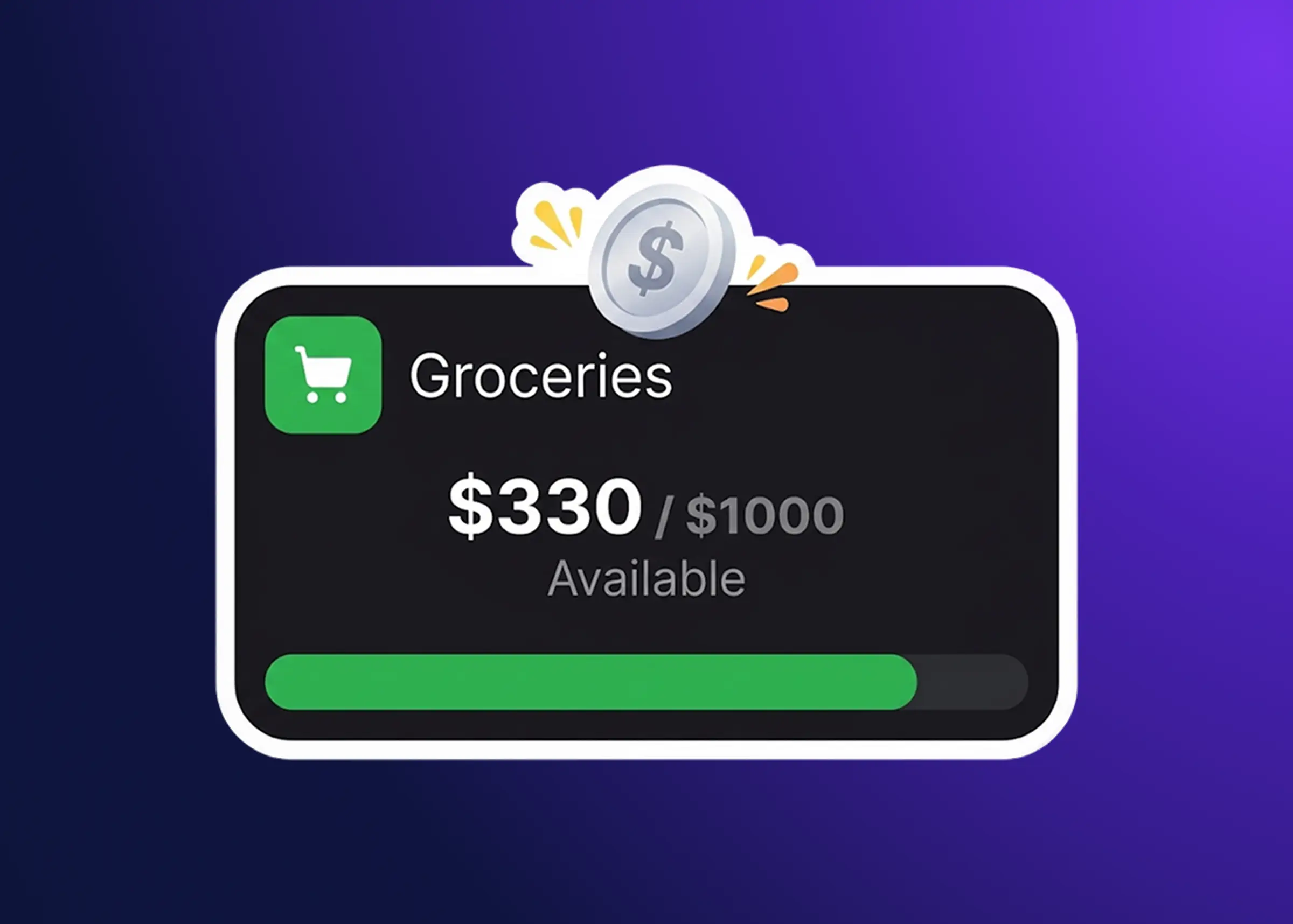
Sinking funds multiply by goal: car insurance, property taxes, holiday shopping, home repairs, the summer trip. Some people open a sub-account inside one savings bank for each; others track them in a spreadsheet or a budgeting app that assigns contributions to labeled buckets. The tracking method matters less than keeping the goals separate enough that you can see each balance on its own.
Linking Emergency and Sinking Funds to Your Safe-to-Spend Number
Both funds change what you can actually afford this month. Money earmarked for a sinking fund looks available in your account balance but is already spoken for, and an emergency reserve should never count as spending power at all. Your safe-to-spend number is what remains after both claims are honored.
Dzing turns that into a transparent formula with a full breakdown. It computes safe-to-spend from your planned operations: recurring salary, subscriptions, bills, upcoming one-off expenses, plus your budgets and savings goals. Emergency fund top-ups and sinking fund contributions both sit in that calculation as line items, so setting aside $200 for car insurance pushes the number down the moment you enter it.
Dzing does not sync with your bank, by design. You enter income, expenses, and goal contributions yourself, which costs you a minute and buys you attention: every dollar passes through your hands once. Multiple accounts with multi-currency support mean money spread across countries still rolls up into one safe-to-spend figure, backed by your spending history and analytics.
One Safety Note
Neither fund replaces insurance. An emergency fund handles a deductible or a small medical bill, but it does not stand in for health coverage, and a car repair sinking fund does not stand in for auto insurance. Both savings strategies work best sitting alongside real coverage.
Tools That Support Emergency and Sinking Fund Tracking
Dzing is built around knowing what is actually safe to spend. It computes a transparent safe-to-spend number from planned operations, budgets, savings goals, and multiple accounts in multiple currencies, then shows you the breakdown behind it. Entry is manual, so you stay aware of how each sinking fund contribution and emergency top-up moves your available cash. It never touches your real money: no bank sync, no transfers, purely a calculator you control.
YNAB uses zero-based envelope budgeting with bank sync. Assigning every dollar to a category before you spend it fits both emergency fund maintenance and sinking fund growth, and expenses land in your ledger automatically.
Monarch Money is an all-in-one dashboard for net worth and budgeting. It syncs banks and investments, so your emergency fund balance and your portfolio sit on the same screen.
Copilot Money does automatic expense tracking with Apple-polished design. If you want your spending categorized without typing anything in, it is the lean option.
Rocket Money focuses on subscription cancellation and bill negotiation. Killing subscriptions you forgot about frees money for sinking fund contributions without earning more.
The tools disagree about philosophy, and that disagreement is the real choice. Dzing favors manual precision and a visible formula, YNAB enforces discipline through categorization, Monarch aggregates everything into a net-worth view, and Copilot and Rocket Money automate different pieces of the work. Pick based on whether you want to see every input yourself or hand the tracking over.