
A checking account cushion is money you leave sitting in checking at the start of a budget period, on purpose. It absorbs overdraft risk and the expenses that never make it into a category. Many budgeters park around $1,000 there, though some size it to one or two months of typical expenses.
Defining the Checking Account Cushion
The cushion is a starting balance you refuse to spend down. Instead of running the account toward zero at the end of each period, you keep a fixed amount parked and treat it as off-limits. It catches the small surprises, the variable bill that lands higher than forecast, and the timing gaps that push you into the overdraft column.
Size depends on your situation. Some people pick $1,000 because it is a clean number; others hold one to two months of expenses. A freelancer with lumpy income has more reason to keep the bigger figure, while someone on a steady salary can run leaner. What matters is that the money is there deliberately, tracked as part of the plan rather than left over by accident.
A Real Example: Building a Cushion from Scratch
One experienced budgeter began with $100 and grew it $15 per paycheck. As her spending patterns became predictable, she raised the target. These days she tops it up with $100 to $200 a month, replacing whatever she pulls out for the uncategorized things that show up between paydays.
That progression is the whole method in miniature. You do not need a big number to start: $15 to $25 per paycheck compounds into something useful, and once you hit a level that feels safe, you switch from building to maintaining. Replenishment then becomes a line item like any other.
Why a Checking Cushion Matters
Overdraft Fee Protection
Overdraft fees are expensive for what they are. The average U.S. bank charged $26.77 in 2025, and across 25 major banks the fee ranges from $0 to $37 per occurrence. One bill posting before a deposit clears, or a utility bill running higher than you forecast, is enough to trigger it. A cushion keeps the balance above zero so the timing mismatch costs you nothing.
Covering Unexpected Expenses
Plenty of spending refuses to fit a category. A dinner someone talks you into, a last-minute ride, a repair you did not see coming: these land between paydays, when your categories are already committed. The cushion absorbs them, so you neither raid savings nor rearrange the whole month’s plan. You spend from it and refill it next paycheck.
Bridging Cash and Digital Spending
Cash envelopes enforce discipline, but cash cannot pay for an online order or a subscription renewal. Pulling from savings to cover those defeats the point of the envelopes. The cushion handles the digital side while your envelopes keep doing their job on physical spending.
The Hidden Cost: Opportunity Loss
Money in checking earns nothing. A high-yield savings account might pay 4-5% a year, so keeping $5,000 in checking when $1,000 would do costs you real interest every year you leave it there. The right cushion sits at the point where it still covers predictable surprises without stranding cash that should be earning.
Checking Cushion vs. Emergency Fund
These two get conflated constantly, and they solve different problems.
An emergency fund handles the disruptions that change your month or your year: a medical bill, job loss, a car or home repair with four digits attached. The common recommendation is three to six months of living expenses, held in high-yield savings and kept away from daily spending. It is not there for a budget that came up short.
The cushion is smaller and lives in checking itself. Its job is the friction of ordinary budgeting: the variable bill, the subscription you forgot renews this week, the social plan that did not make the forecast. Roughly $500 to $2,000 of buffer, with the emergency fund sitting behind it as the deeper reserve.
Building and Maintaining Your Cushion
Budget the cushion the way you budget rent. Give it a line item, name it something obvious like “Cushion Replenishment,” and fund it with the same amount every paycheck or every month.
Starting at $15 to $25 per paycheck is fine. Over six months to a year that accumulates to somewhere between $360 and $1,200, depending on how often you get paid. Once you reach your target, whether that is $500, $1,000, or $2,000, you stop building and start replacing only what you withdraw, which for regular users runs $50 to $200 a month.
The difference between a cushion that survives and one that quietly disappears is whether it gets funded on schedule. Treated as a bill, it rebuilds itself. Treated as whatever happens to be left over, it erodes the first month things get tight.
The Payoff: Stability and Peace of Mind
With a cushion in place, budgeting stops feeling like balancing on a wire. You quit refreshing your balance before every purchase, and a bill that runs $50 over forecast stops being an event. The buffer takes the hit instead of your plan.
The emotional return is as real as the financial one. Money is a leading source of everyday anxiety, and a cushion takes a specific piece of that off the table: you know the money is there, so you stop rehearsing what happens if it is not.
How Dzing Helps You Track Your Cushion
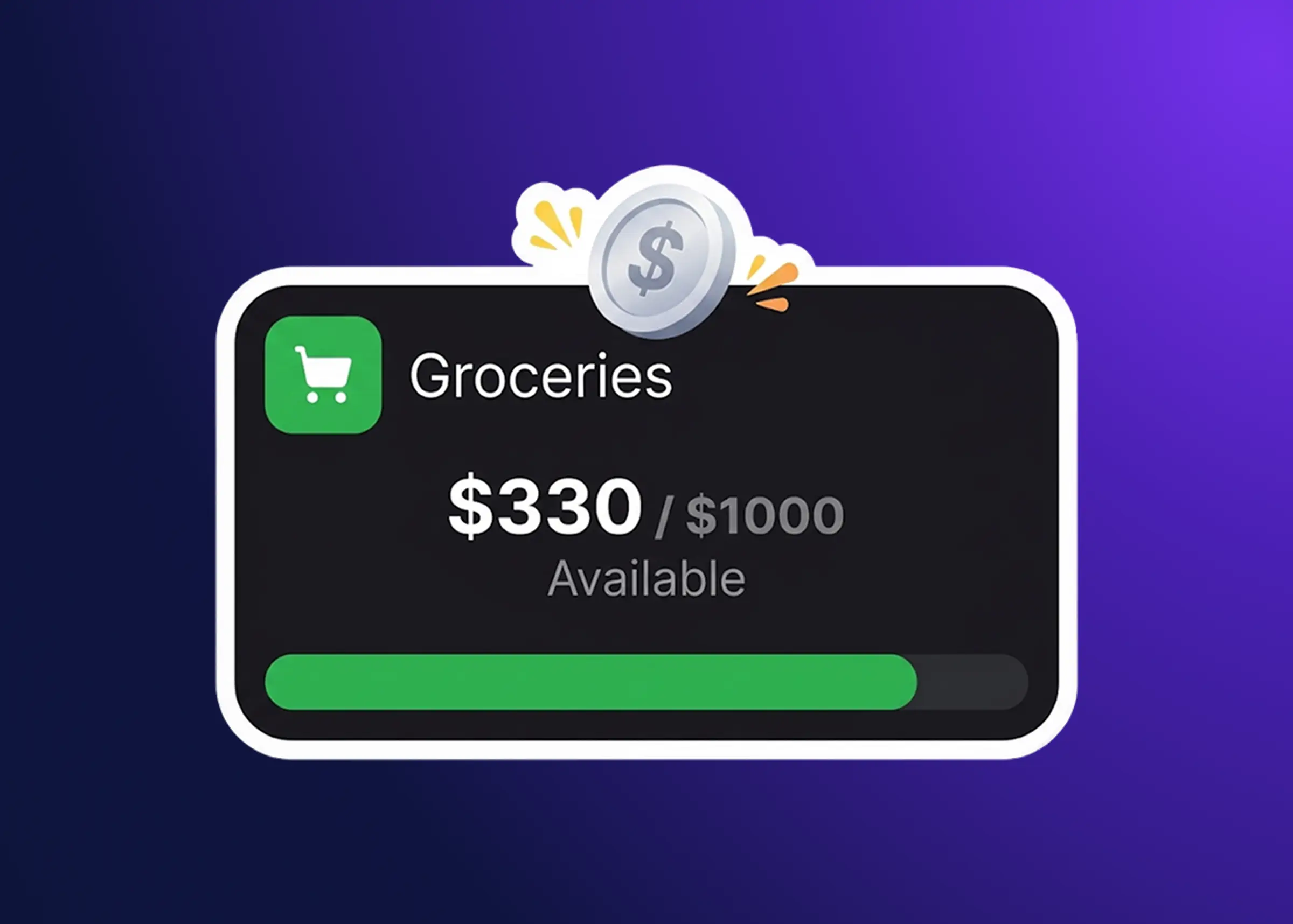
Dzing computes a safe-to-spend number from a transparent formula and shows you the full breakdown. Instead of guessing whether a purchase fits, you see what is left after every planned operation is accounted for: recurring salary, bills, subscriptions, budgets, and savings goals.
Enter your cushion as a planned operation, a fixed transfer each month or period, and it folds into that calculation. The safe-to-spend figure you see already has cushion maintenance subtracted, so you can tell when you are drawing the cushion down faster than you are refilling it.
Multiple accounts and multi-currency support mean you can see which account actually holds the cushion and how it moves. Spending history and analytics make the pattern legible: if your utilities swing more than you assumed, the depletion shows up there, and you can raise your replenishment rate before an overdraft does it for you.
Dzing never syncs with your bank and never moves money. Every entry is manual by design, which is the trade-off: more typing, in exchange for knowing exactly where each number came from.
Tools That Use Checking Account Cushions
If the cushion approach fits how you think, a few tools support it in different ways.
Dzing (https://dzing.money) shows a safe-to-spend number after every planned operation, so cushion depletion is visible rather than inferred. Entry is manual, which means nothing enters your accounts that you did not put there yourself.
YNAB (https://www.ynab.com) runs on zero-based budgeting: every dollar gets a job, cushion included. It syncs with your bank for real-time balances, which suits you or does not depending on how you feel about automatic entry.
Monarch Money (https://www.monarchmoney.com) pulls all your accounts and net worth into one dashboard, so the cushion reads as one piece of a larger picture. The emphasis is on automated tracking and reporting.
Copilot Money (https://copilot.money) is the Apple-polished, automatic option for expense tracking. Let the app capture transactions and the cushion just shows up in your overall balance.
Rocket Money (https://www.rocketmoney.com) centers on subscription cancellation and bill negotiation, with budgeting and balance tracking alongside. Worth it if wrangling bills is the main problem you are solving.
Two philosophies split this list. Dzing and YNAB ask you to make deliberate decisions about every dollar, while Monarch, Copilot, and Rocket Money automate the tracking so you spend less time in the app. Pick based on how hands-on you actually want to be, not how hands-on you wish you were.